Category: Projects

  • DRIS

    DRIS

    Dynamic Traveler Information System

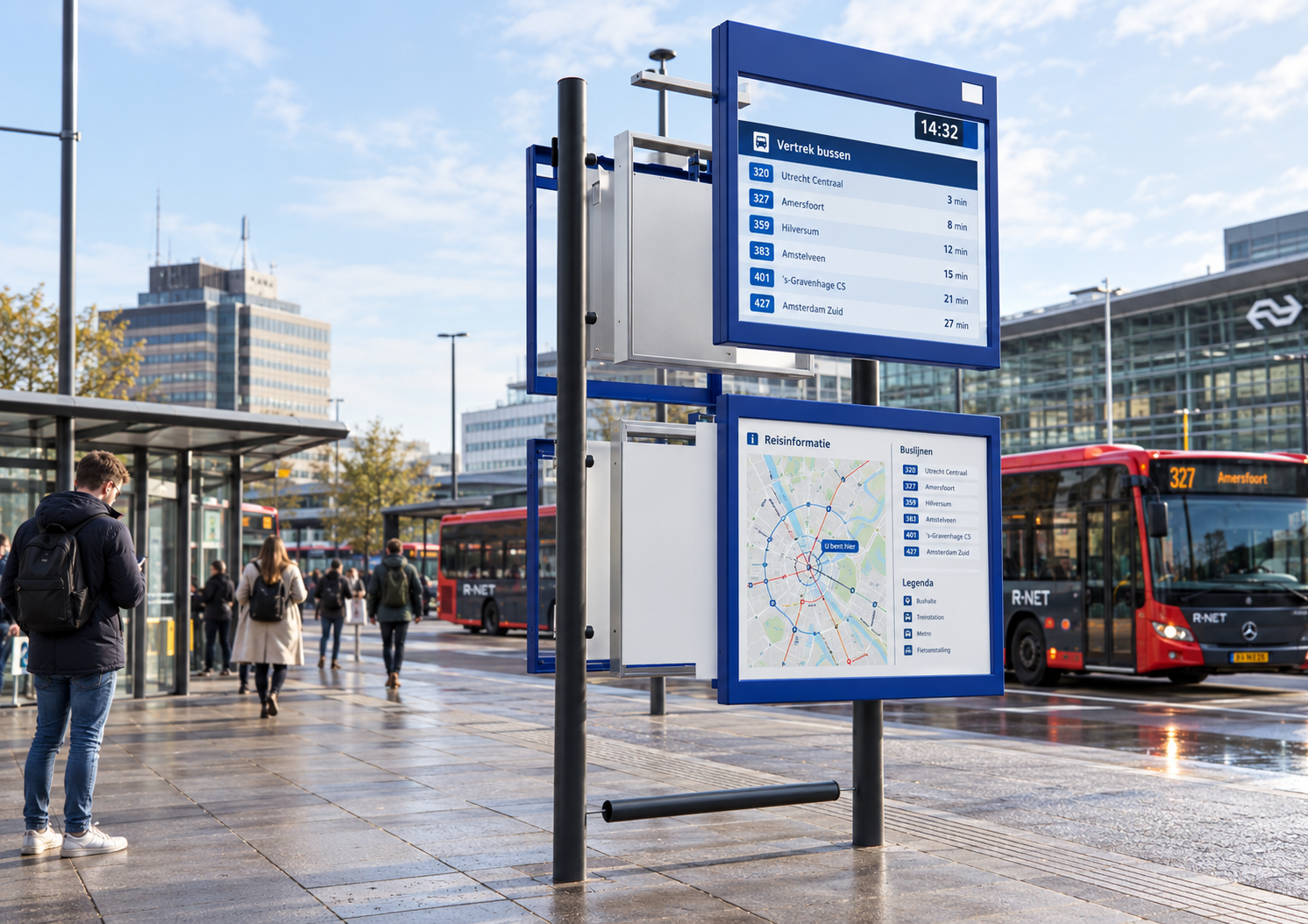
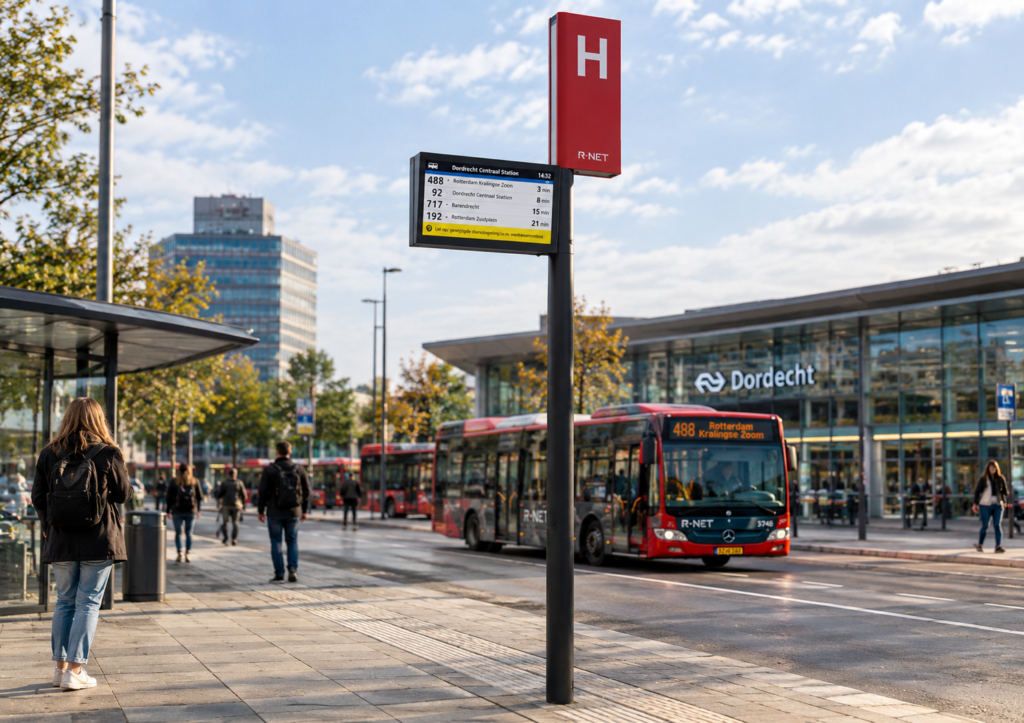
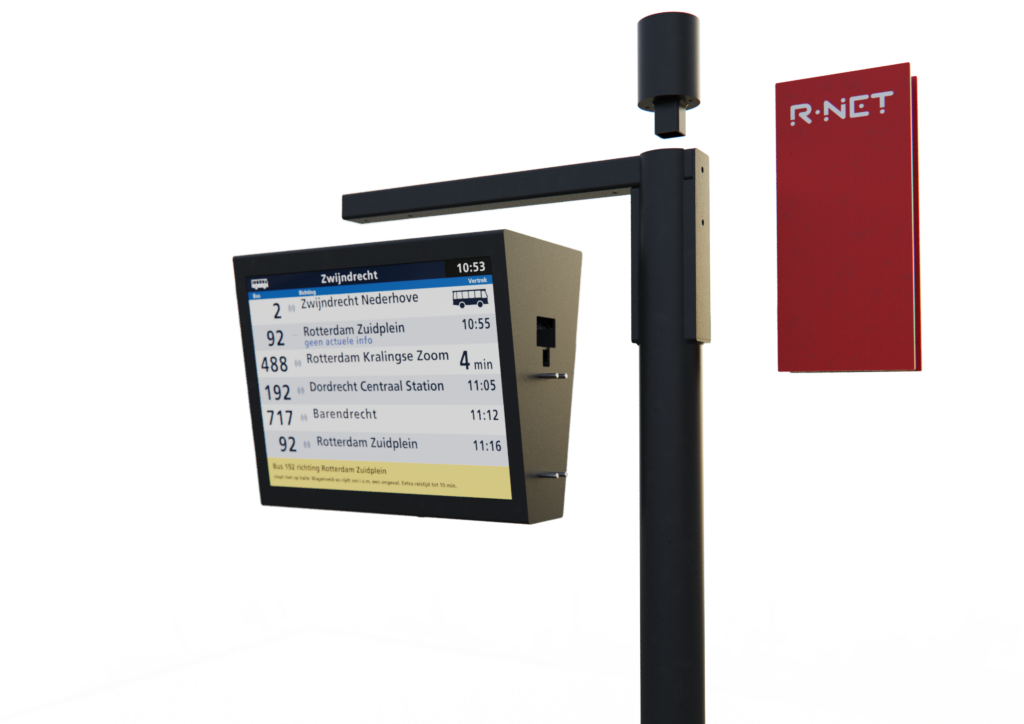
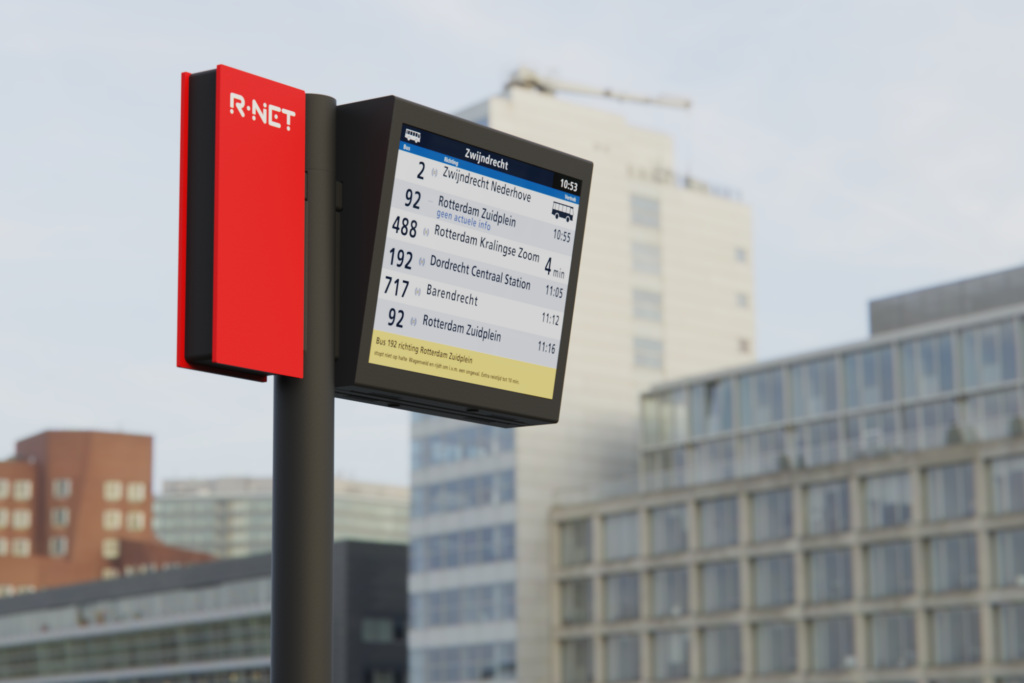
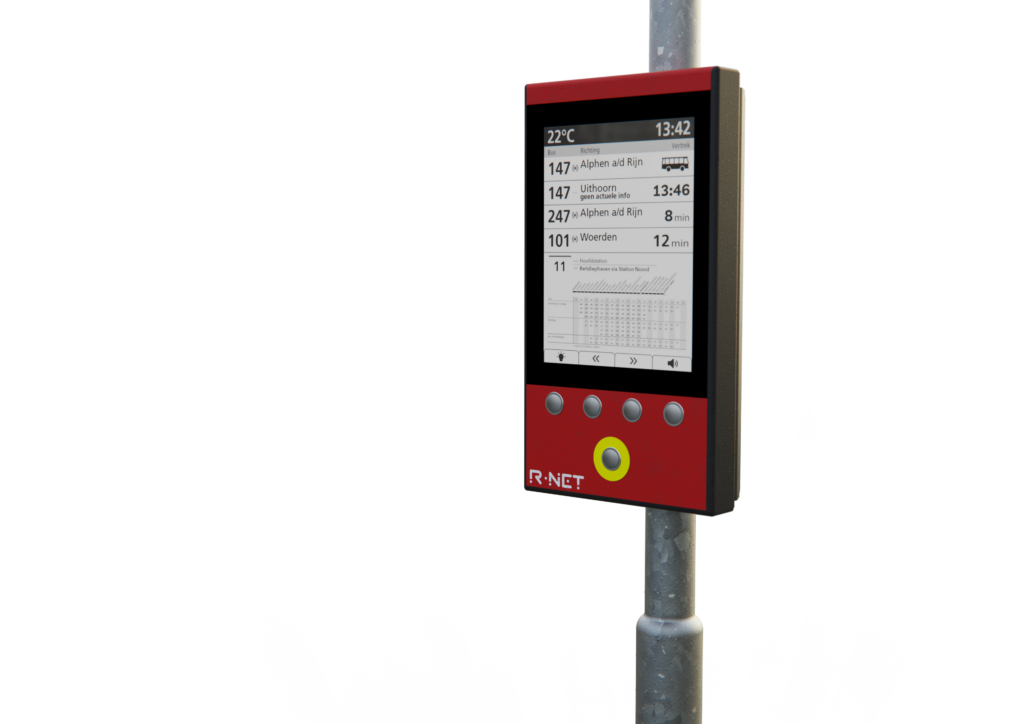
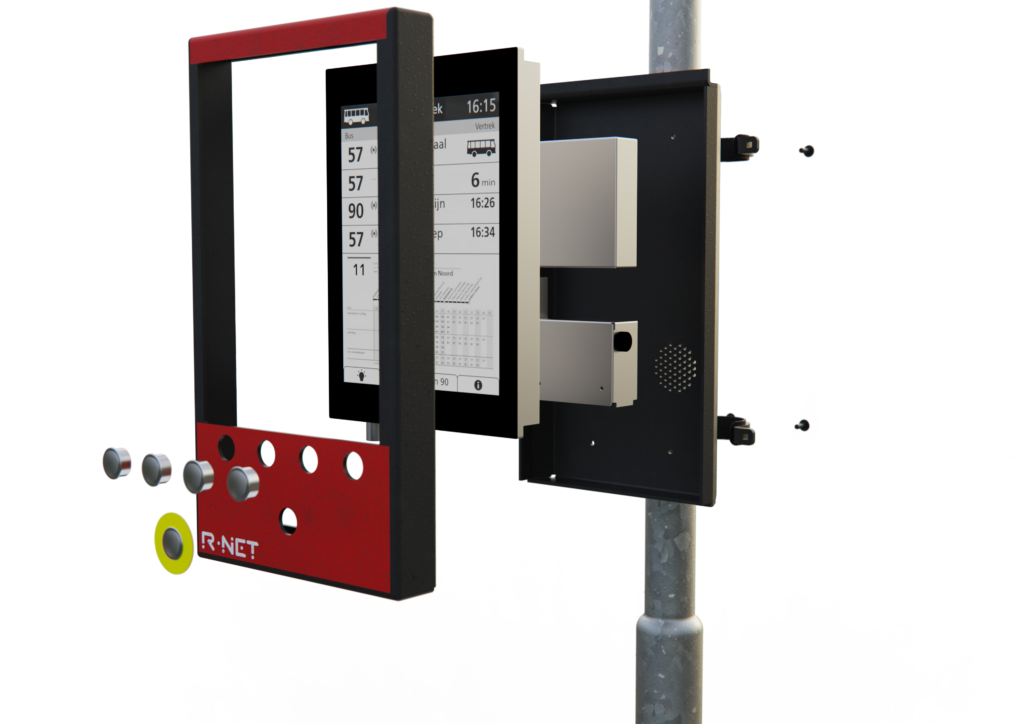
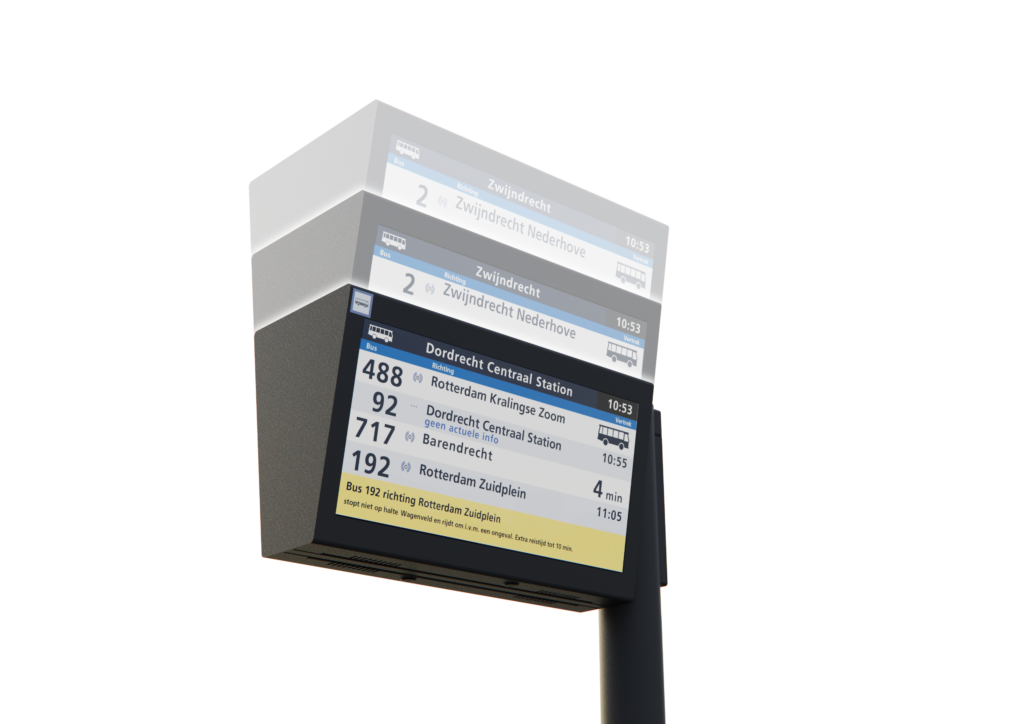
    R-net is the public transportation network of the Randstad region. They inform their travellers on their various departure and arrival platforms through DRIS (Dynamic Traveler Information System).

    Time savings up to 30 seconds for every train stop

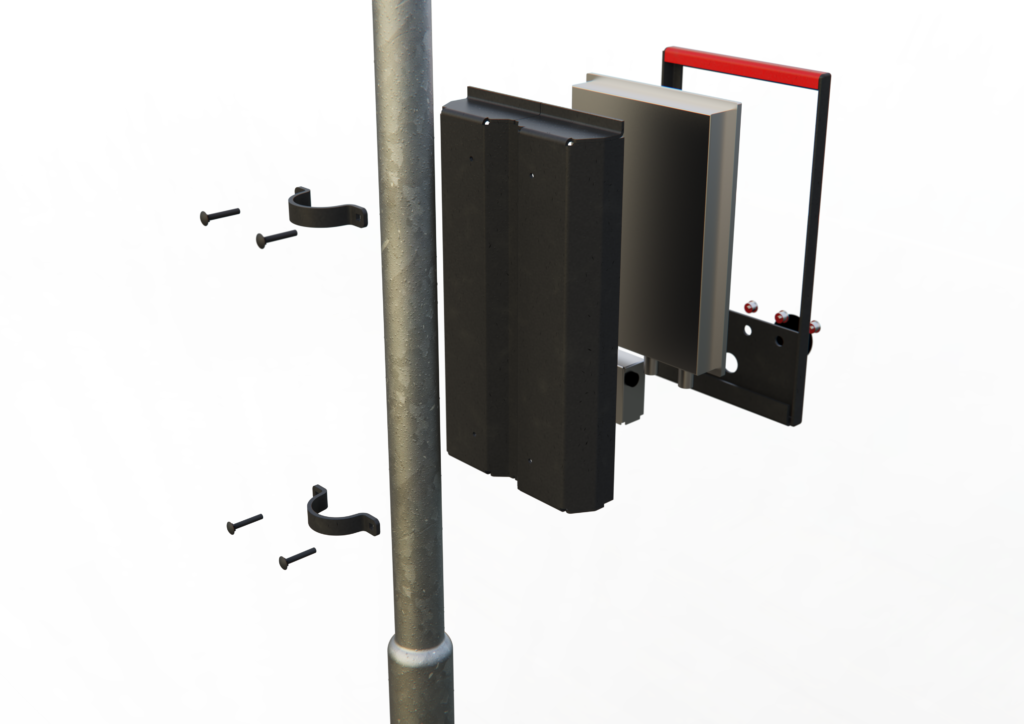
    For the European tender process we designed 4 models of DRIS in several modular configurations. The tender included the production and maintenance for 10 years.With the added security of radar passenger-in-rail accident detection, the chances of accidents happening are reduced.

    Team: Everlab, Conclusion ForeyeT

    Duration: 4 months
    2023

    Contributions:
    Ideation
    Design
    Design for Manufacturing

  • Your (future) project

    Your (future) project

    We look forward to get in contact with you and hear about your ideas. We simply can’t stop ourselves from trying to think with you and see how we can help you make it into a successful project. Not sure how we can help? Feel free to reach out anyways. We are happy to see how we can help you.

  • IPBL

    IPBL

    Intelligent Platform Bar Lite

    An in-platform display that can be controlled in real-time to show where the doors of the next train will be.

    Time savings up to 30 seconds for every train stop

    With the added security of radar passenger-in-rail accident detection, the chances of accidents happening are reduced.

    Team: Everlab, Conclusion ForeyeT

    Duration: 1 year
    2022-2023

    Contributions:
    Ideation
    Design
    Design for Manufacturing
    Production of functional prototype

    Passenger-in-rail accident detection, an increased level of safety due to less movement on the platform. Time savings of up to 30 seconds per stop (during rush hour) when travelers know where the doors will be before the train/metro has arrived at the platform.

    Time savings up to 30 seconds for every train stop

    To achieve this we co-developed the Intelligent Platform Bar Lite (IPBL) that can be controlled in real-time to show where the doors of the next approaching vehicle are going to be, before it arrives. The schedule of arriving trains and their carriages is used to calculate the door position for trains about to arrive. A fluid solution that adjust for every railway vehicle.

    The IPBL is currently deployed at one metro station and one train station in the Netherlands. Tests are being conducted that will determine how many of the 400 Dutch platforms will get the product.With the added security of radar passenger-in-rail accident detection, the chances of accidents happening are reduced.

  • 32/64

    32/64

    Upgrading the iconic blue displays

    If you have ever travelled by train in The Netherlands you will know the iconic blue displays above the platforms showing arriving and departing trains and delays.

    Same iconic look, future proof upgrade

    Team: Everlab, Conclusion ForeyeT

    Duration: 2 years
    2021-2023

    Contributions:
    Ideation
    Design
    Design for Manufacturing
    Design o
    Production of functional prototype

    When these displays need to be upgraded or maintenance has to be done, Conclusion ForeyeT springs into action. For this, Everlab designed several internal parts throughout the years and designed and produced an essential part of the factory assembly line. This rotating product allowed workers to effortlessly reorient the heavy displays for installation and quality control.

  • Zeno

    Zeno

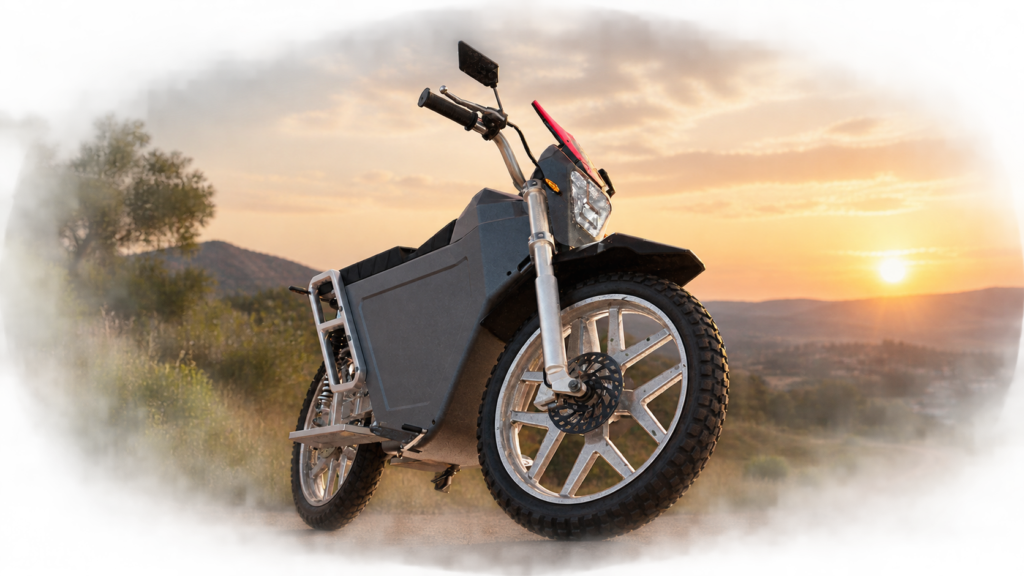
    Electric Motorcycles to battle the Climate Crisis

    It is estimated that 5% of global CO₂ eq. emissions come from old, inefficient two-wheeled vehicles.

    Fast growing economies significantly rely on this kind of transportation and will continue to do so, while much cleaner options could be made available at a similar price point.

    Team: Everlab, Zeno

    Duration: 1 year
    2022-2023

    Contributions:
    Ideation
    Design

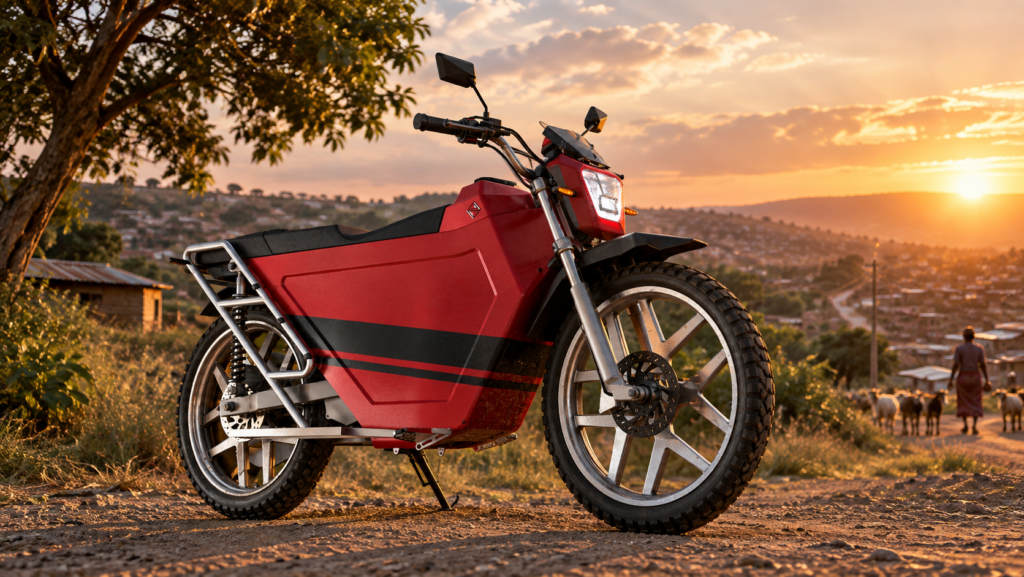
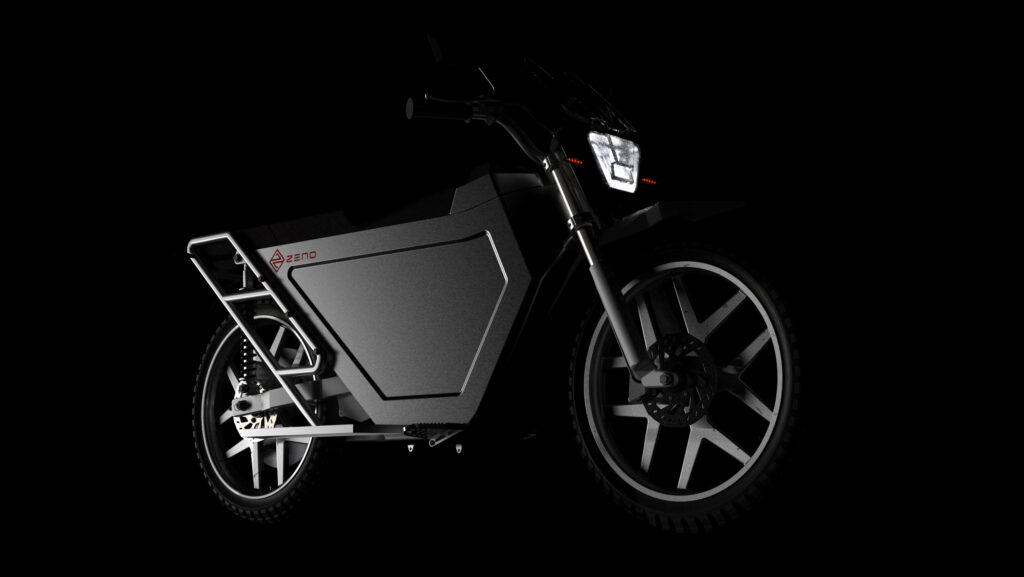
    Electric motorcycle design render

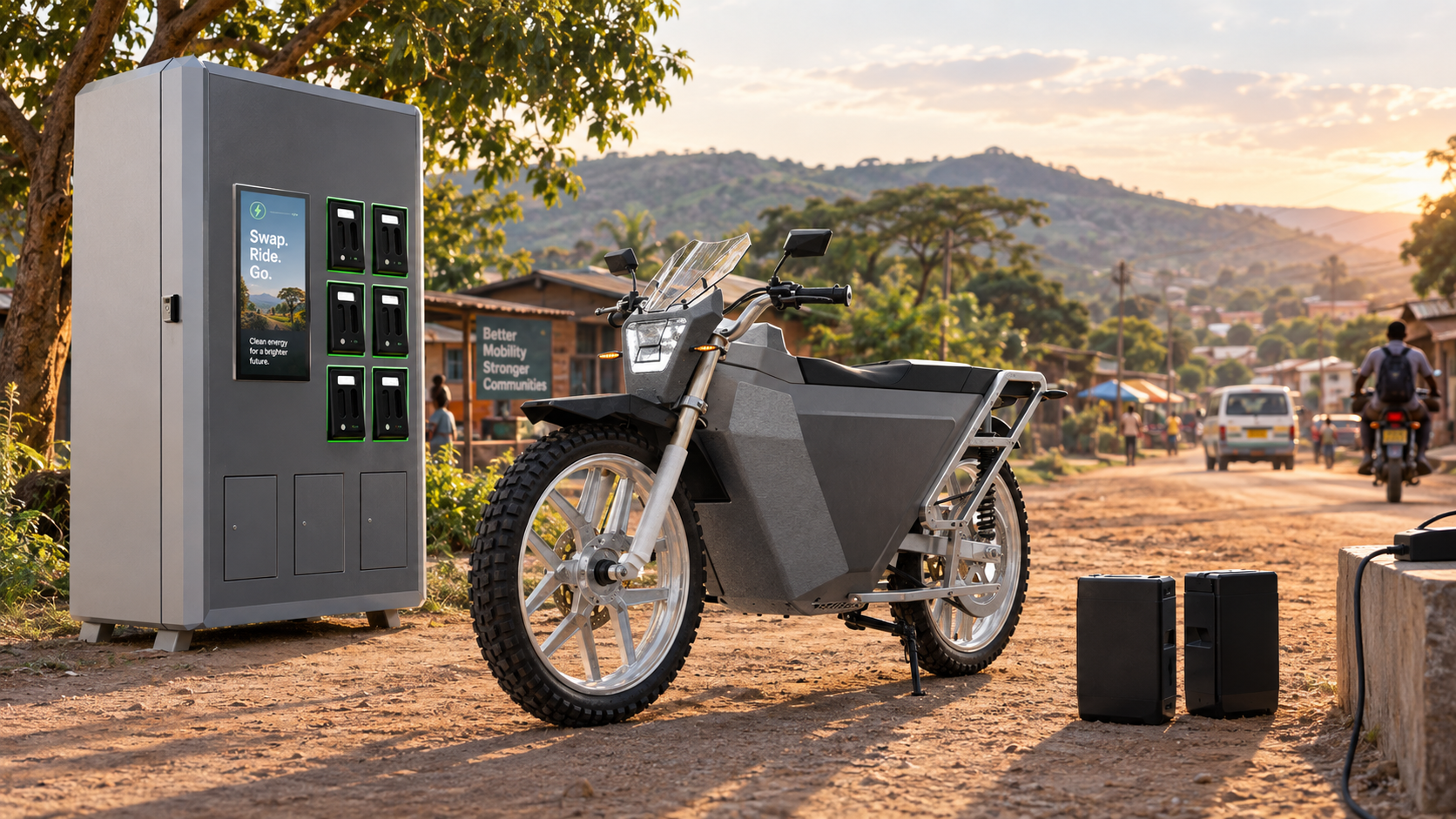
    Asked to help design the electric motorcycle for this user group. The production cost per motorcycle needed to match current internal combustion motorcycles. The infrastructure, allowing users to self-swap the batteries, was part of the design requirements; batteries for rent.

    The motorcycle needs to accommodate its various use case scenarios: In many places they would be used as taxis, while others use them to transport large amounts of materials over non-flat terrain.

    Our US based client is no new player in the electric vehicle market. Therefore, the design process was fast paced and the boundaries of our design process were everchanging but clearly communicated.

  • VTS

    VTS

    Vehicle Traffic Sign

    Everlab was asked to design a retrofit Vehicle Traffic Sign (VTS) for on the runway grass for Schiphol Airport among others.

    VTSs are used to help aircrafts and runway service personnel navigate safely and communicate effectively. Vehicles need clearance from the control tower before they are allowed access to, or before they can cross any runway. Obviously this is essential for running a safe operation. As an additional level of safety, the VTS was developed.

    one-size-fits-all “pillar” that features all the components of the solution.

    Team: Everlab, Conclusion ForeyeT

    Duration: 6 months
    2021

    Contributions:
    Ideation
    Design
    Design for Manufacturing
    Production of functional prototype

    The new VTS is a digital display, retrofitted in the current analog sign housing. The signs are stand-alone and are operated centrally in the control tower. The displays are fully customizable, which allows the display of any information to the ground and air vehicles. STOP and GO signifiers or simply replacing a broken display.

    Runways are hostile environments when it comes to weather conditions: Airplane jets blow high amounts of wind (400kph+) and water, as well as debris, horizontally against the signs. Therefore, the product needs to be able to withstand these conditions, which required good design and thorough testing.

    Several products are currently being tested on runways.

  • Pillar

    Pillar

    Stand-alone central control unit for factories

    For Awesome Technologies, a German company specialised in modernising how factories operate, Everlab designed the stand-alone central control ACPS-Pillar for their tablet based software solution.

    From this central hub, the surrounding factory equipment can be controlled and a tablet or AR glasses can be used to view information about the processes in real time.

    one-size-fits-all “pillar” that features all the components of the solution.

    The product is placed in high-tech factories, where space optimisation is a driving factor for efficiency.

    Team: Everlab

    Duration: 6 months
    2022

    Contributions:
    Ideation
    Design
    Design for Manufacturing
    Production of functional prototype

    Furthermore, the aesthetics of the pillar need to fit the futuristic AR enabled factory. The shape of the folded metal feels a bit like a puzzle.

    Since factories, even high tech ones, can be dirty and dusty, the pillar needed to protect the VR headset, the computer, the keyboard and the UPS.

    Everlab built five fully functional prototypes in various colors for the client to showcase to their own clients and prospects.

    During the design process, the scalability was a crucial aspect. The production steps are quite minimal. This contributes to allowing for JIT (just in time) manufacturing.

  • Ambyon

    Ambyon

    Healthcare robot for smart hospital logistics

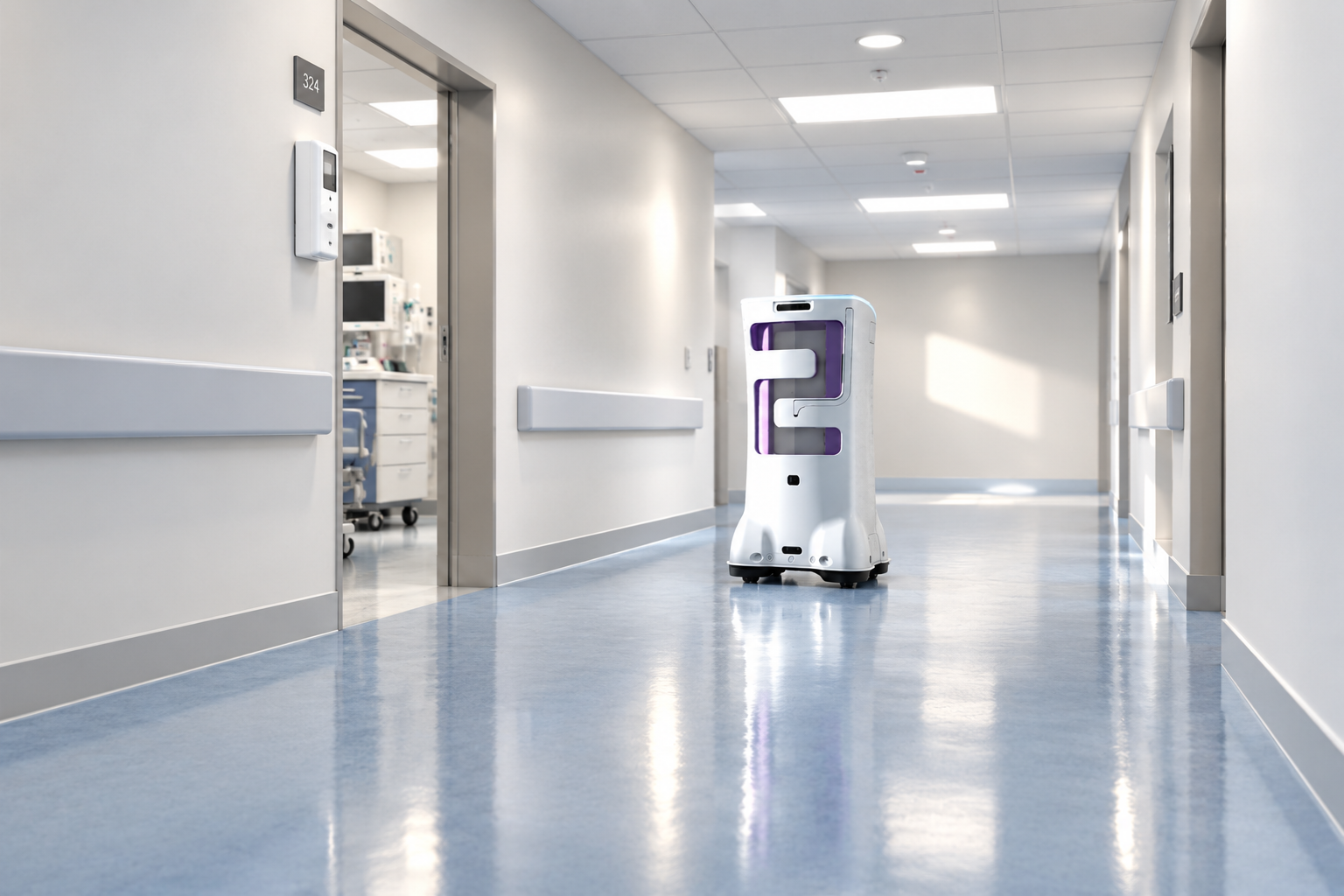
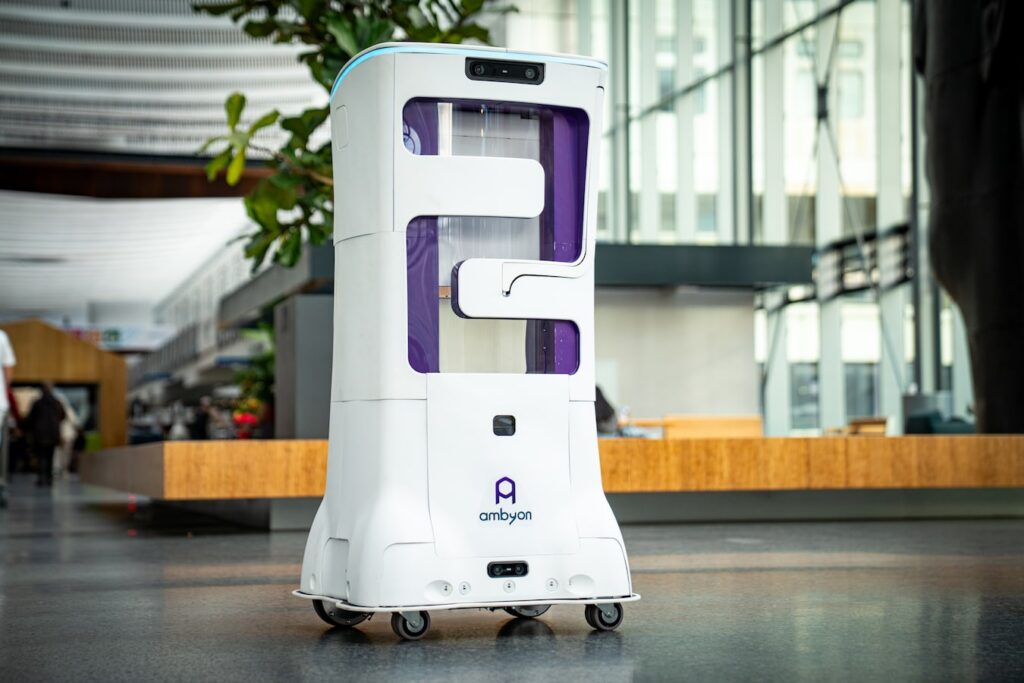
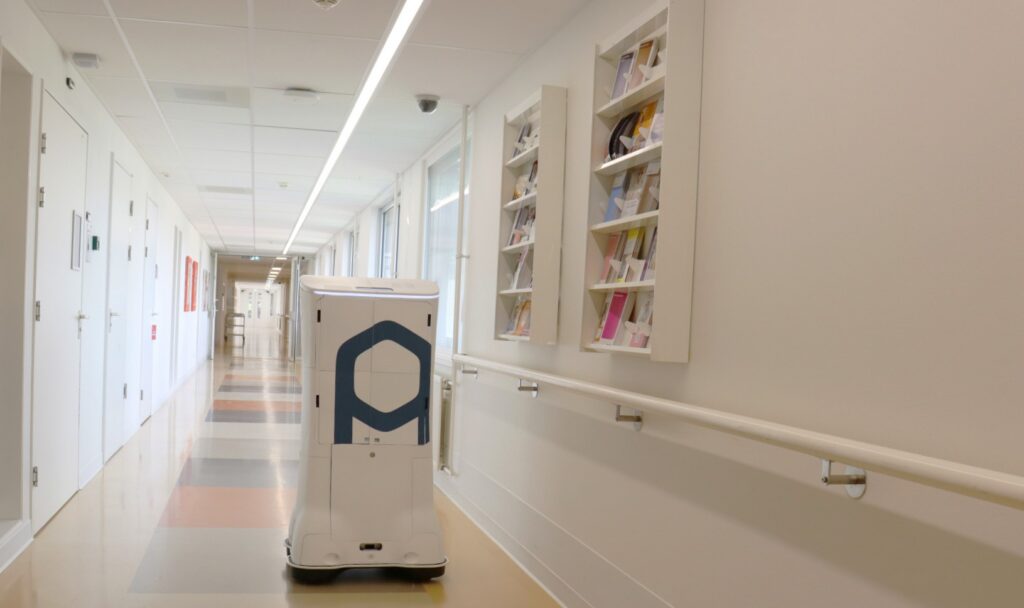
    Ambyon developed an autonomous healthcare robot that transports medication, chemotherapy and patient samples throughout the hospital on a daily basis. The robot is currently being tested in several hospitals and is designed to relieve healthcare staff from time-consuming logistical tasks, allowing them to focus on what truly matters: the patient.

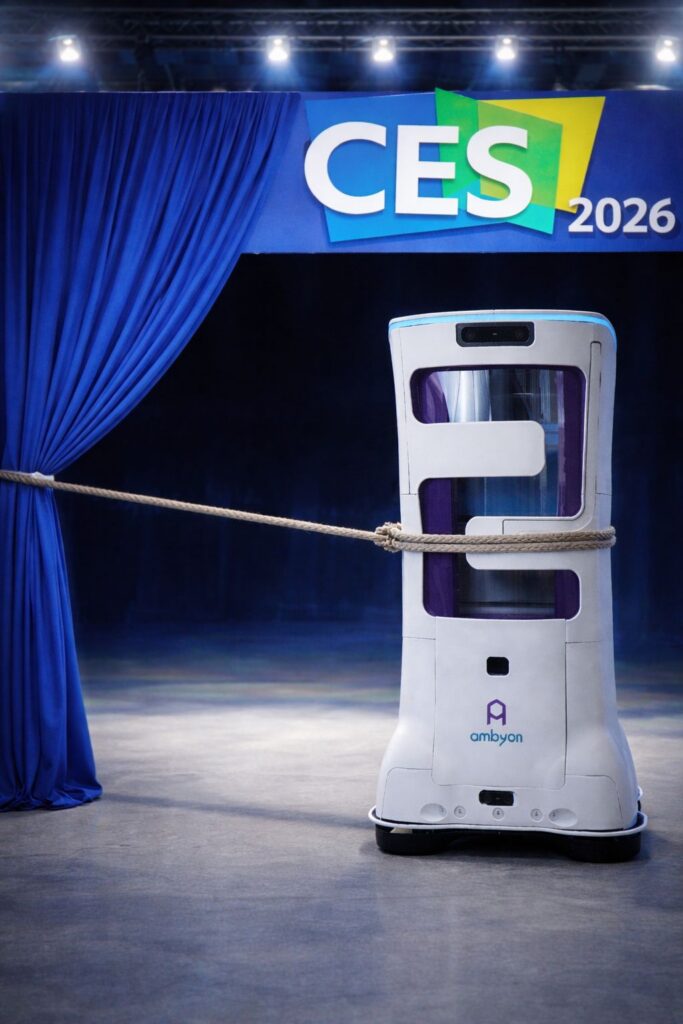
    From idea to deployable robot, at speed

    Ambyon’s brief was clear yet ambitious: develop a physical robot that operates reliably, safely and intuitively in one of the most complex environments imaginable — a hospital. Starting from an initial sketch and functional requirements, we moved rapidly to a fully produced, operational robot capable of navigating busy hospital corridors autonomously.

    Team: Everlab, Ambyon

    Duration: 5 months
    2025

    Contributions:
    Ideation
    Design
    Design for Manufacturing
    Production of functional prototype

    Everlab was responsible for the industrial design and production of the robot, including:

    • the complete exterior design and housing
    • physical interaction points for healthcare staff
    • integration of sensors, access control and electronics
    • design and production for a (small) initial series, with maintenance and modularity as key design principles

    Designed for people and environment

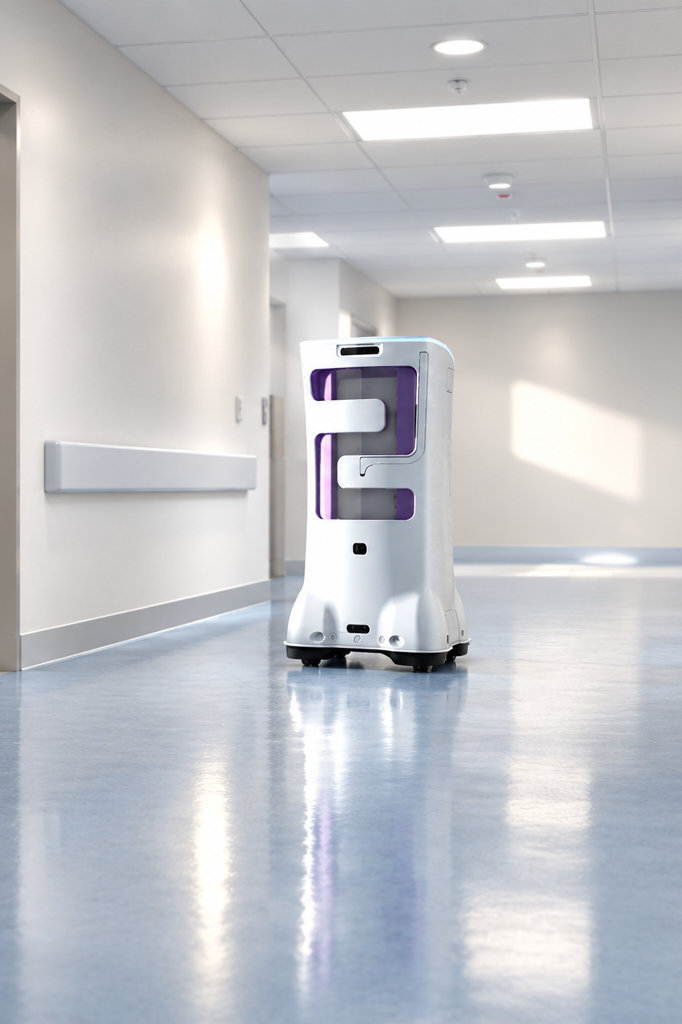
    Unlike factories or warehouses, hospitals are in constant motion. Patients, beds, clinicians, visitors and logistics continuously intersect. This required a design that is not only technically robust, but also socially and visually reassuring. The robot was deliberately designed to be neutral, compact and friendly, allowing it to blend into the environment without becoming a barrier for staff or patients.

    Innovation with immediate impact

    Healthcare professionals spend an estimated 20–33% of their time on internal logistics. The Ambyon robot can take over a significant portion of this work, reducing stress and workload. This project demonstrates how thoughtful industrial design, combined with intelligent technology, can directly enable scalable innovation in healthcare.

    My role

    This project exemplifies best:

    bringing complex products from concept to reality at speed, with a strong focus on users, production and real-world impact. From first design to a robot now operating in a leading academic hospital.